A chimney cap is the metal-and-mesh cover mounted over the flue tile or the top of the crown. When wind lifts a cap off, a common call across Almaden Valley and the ridgelines above Alum Rock, where gusts funnel…
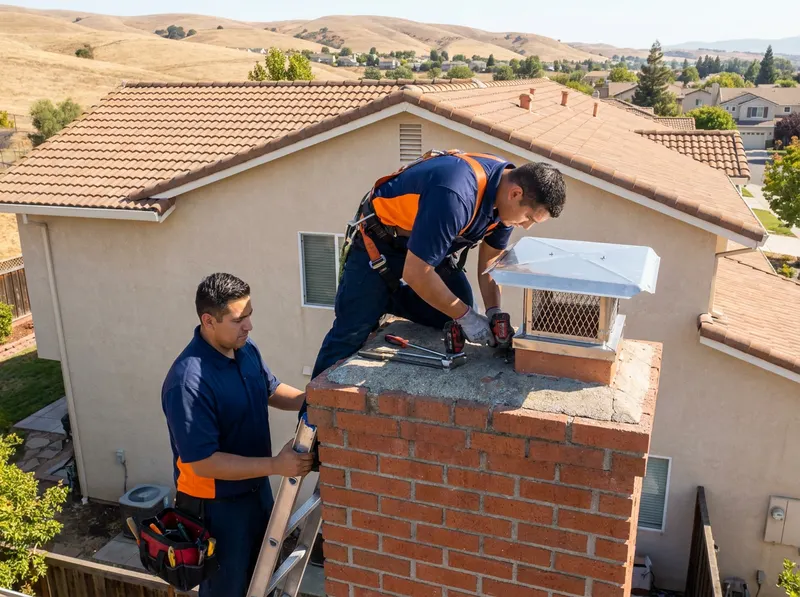
A chimney cap is the metal-and-mesh cover mounted over the flue tile or the top of the crown. When wind lifts a cap off, a common call across Almaden Valley and the ridgelines above Alum Rock, where gusts funnel through the foothills, the flue is left open to rain, nesting birds, and leaves. If the cap itself is undamaged, the fix is usually to reattach it with new stainless fasteners or a corrected clamp; if the metal is bent, the mesh is torn, or the galvanized steel has rusted through, a chimney cap replacement is the durable answer. A photo of the chimney top texted to (408) 550-9878 is enough to tell most homeowners which of the two applies.
There are three real options and each fits a different situation. A single-flue cap clamps or screws directly onto one exposed flue tile and suits most homes in Willow Glen, the Rose Garden, and Naglee Park where a single fireplace vents through one flue. A multi-flue cap is a larger stainless enclosure that covers the whole crown when two or more flues share the chimney, which is typical on older Japantown and Cambrian Park homes with a fireplace and a furnace flue side by side. A custom-fabricated cap is measured and built when the crown is oversized or an odd shape. As a general guide: a bent or rusted single-flue cap points to a stock replacement; a leaning or blown-off cap on a sound crown points to a reattach; two or more open flues point to a multi-flue cap.
The cap and the crown are separate parts that fail for different reasons. The crown is the concrete or mortar wash that slopes off the top of the brick; cracks in it let water into the chimney structure and are addressed by chimney crown repair with a crown sealant or a mortar patch, not by a new cap. A cap replacement without crown repair leaves the underlying leak; a crown repair without a cap leaves the flue open. Both are checked together during a Level 1 visual inspection, and a Level 2 inspection is warranted after a chimney fire, a property sale, or a lightning strike, per NFPA 211. The spark-arrestor screen on the cap, the mesh that catches embers, is a fire-safety component the Chimney Safety Institute of America (CSIA) treats as part of a functioning cap, so a torn screen is a reason to repair even a cap that still sheds rain.
Work on a damaged chimney cap starts with the ground-level view and a photo report so the homeowner sees the actual condition before any part is quoted. The steps are straightforward: 1) inspect the cap, crown, and top brick course; 2) measure the flue opening or crown footprint; 3) recommend a reattach, a stock cap, or a custom cap with the reason stated; 4) fasten or install with stainless hardware rated to resist Bay Area coastal-air corrosion. Edge cases change the plan, a crown too cracked to hold a clamp needs crown repair first, and a chimney with active water intrusion into Evergreen or Blossom Valley living space is inspected inside before a cap goes back on. The free on-site estimate confirms the exact price and scope before anything is ordered.
Every job gets a firm, written price after a free on-site visit.
Tell us about your chimney cap repair & replacement job in San Jose and we'll send a clear, written quote, usually the same day.
 Sootknight Chimney Sweep