A chimney water leak has one or more of four sources: a cracked concrete crown at the top, failed flashing where the chimney meets the roof, a missing or damaged cap, and porous brick or mortar joints that absorb rain.…
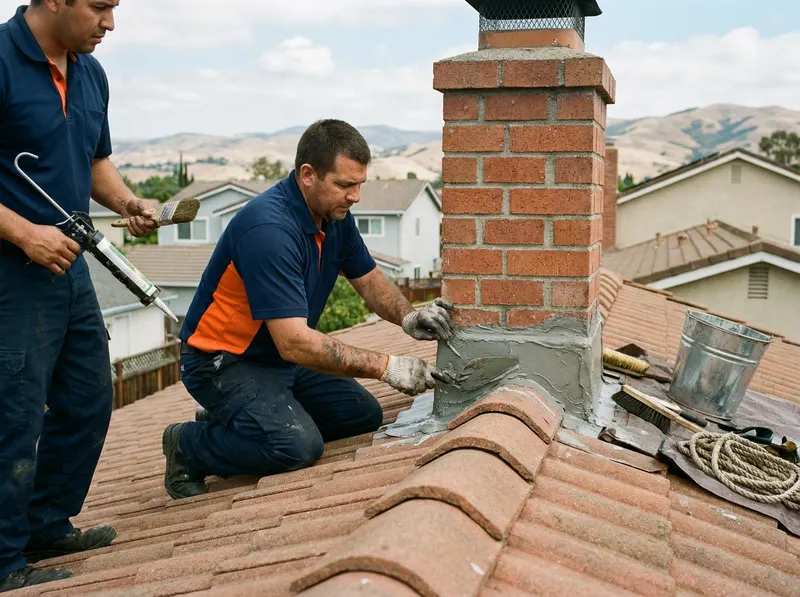
A chimney water leak has one or more of four sources: a cracked concrete crown at the top, failed flashing where the chimney meets the roof, a missing or damaged cap, and porous brick or mortar joints that absorb rain. Identifying which one applies changes the repair. Flashing leaks appear as staining on the ceiling near the chimney chase; crown cracks and open mortar joints usually show as damp masonry and efflorescence, the white powdery salt residue left as water evaporates out of brick. A camera inspection and exterior review confirm the source before any work is quoted, so the repair matches the actual defect rather than a guess.
Waterproofing addresses the fourth cause. Brick and mortar are porous; a chimney in Willow Glen or the Rose Garden that has never been sealed can absorb water through its face during a wet winter, then push that moisture inward. Chimney waterproofing uses a vapor-permeable siloxane or silane repellent, not a film-forming paint or standard masonry sealer. The distinction matters: a vapor-permeable product blocks liquid rain from entering while still letting trapped water vapor escape, whereas a non-breathable coating traps moisture and can spall the brick face. This treatment is preventive; it does not fix an active leak from a cracked crown or lifted flashing, which must be repaired first.
Decision-fit depends on where the water enters. If ceiling stains sit directly around the chimney and appear after rain, the flashing is the likely source and flashing repair or replacement is the fix. If the masonry itself is damp, crumbling at the mortar, or showing efflorescence across the face, crown sealing and waterproofing address it. A cracked crown on an older Naglee Park or Japantown home is repaired with a crown coat or rebuild before repellent is applied. Homes in Almaden Valley, Cambrian Park, and Blossom Valley with taller two-story chimneys carry more exposed surface area, which raises the waterproofing figure. A leaking chimney repair that ignores the source and only seals the outside will not stop water already entering through a structural gap.
Inspections follow the NFPA 211 framework used across the trade. A Level 1 inspection covers readily accessible portions and suits a chimney with no known problem; a Level 2 inspection adds a video scan of the flue interior and is appropriate when a leak, staining, or a property sale is involved. The Chimney Safety Institute of America (CSIA) sets the training standards these inspection levels reference. The written report documents the source with photos so a homeowner in Evergreen, Berryessa, or Alum Rock can see the defect rather than take a verbal claim on trust. The on-site leak estimate is free. Reach the office at (408) 550-9878; a photo of the chimney sent by text lets the price be scoped before the visit.
Every job gets a firm, written price after a free on-site visit.
Tell us about your chimney leak repair & waterproofing job in San Jose and we'll send a clear, written quote, usually the same day.
 Sootknight Chimney Sweep